Apply for 2026 / 2027 intake.
Study at Liverpool School of Tropical Medicine
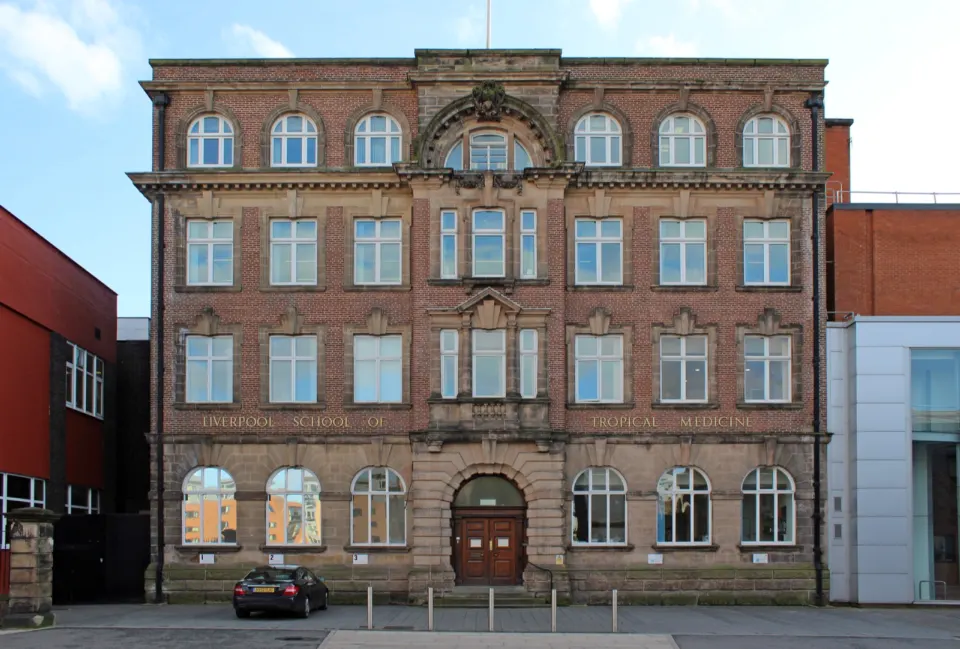
- Location
- Liverpool
- Founded
- 1898 (first institution in the world dedicated to tropical medicine)
- Students
- 279 (2022/23)
- Type
- Specialist postgraduate teaching and research institution
- Main intakes
- September (most campus master's); January (MRes, some programmes)
- Study levels
- Postgraduate taught, Postgraduate research, Professional diplomas
Liverpool School of Tropical Medicine (LSTM) is a small, specialist institution in Liverpool, and it takes postgraduates only. Founded in 1898, it was the first institution in the world set up specifically for research and teaching in tropical medicine. The student body is small (about 279 students in 2022/23), but the research community behind it is not: over 500 active researchers, working in 60 countries with some 2,000 partner organisations. The work is concentrated on infectious disease, parasitology, vector biology, public health and humanitarian practice. Recent UK assessments have been strong. LSTM was ranked second nationally for research impact and twelfth overall in REF 2021, and first for student support among postgraduate taught students in PTES 2026. Teaching grows directly out of that research and is closely tied to field programmes overseas. If you want a focused way into global health, tropical disease or humanitarian work, this gives you real depth in a narrow field. What it doesn't give you is the broad experience of a large, general university.
Location and student life
LSTM has a compact base at Pembroke Place in central Liverpool, next to the University of Liverpool precinct. Teaching rooms, specialist laboratories and support services are all within walking distance of each other. The school describes Liverpool as a lively student city, with good transport links, plenty going on culturally and a wide choice of places to live. Students settle in neighbourhoods across the centre and take part in the life of a city known for music, football and its waterfront. Having everything on one site suits postgraduates who want things close at hand. Beyond the school itself, the neighbouring universities add libraries, societies and opportunities for part-time work.
Courses and subjects
Everything here is postgraduate, organised into four departments: International Public Health, Tropical Disease Biology, Clinical Sciences and Vector Biology. The subjects LSTM is known for include tropical and infectious diseases, parasitology, vector biology and malaria, global and public health, humanitarian studies and practice, and sexual and reproductive health. The portfolio is made up of full-time campus MSc degrees, an online MSc in Global Health, an MRes with entry in September and January, professional diplomas in tropical medicine, nursing and travel health, PhD and DrPH research degrees, and short CPD courses. Teaching is tied to work in laboratories, in clinical settings and in the field, including research on snakebite, diagnostics and health systems.
Entry requirements for international students
Since entry is postgraduate, you'll normally need a relevant undergraduate degree. The grade and subject required vary by course, so check the page for the course you're interested in. Teaching is in English. Taught master's courses typically ask for IELTS 6.5 overall with no less than 5.5 in each component, or TOEFL iBT 88 with minimum scores of 21 for writing and listening, 22 for reading and 23 for speaking. Course pages also list alternatives, such as TOEFL and school certificates. International applicants apply through MyLSTM, and you'll need a student visa where one applies to you.
Accommodation
LSTM doesn't have halls of residence of its own, so you'll need to arrange somewhere to live yourself. The school directs postgraduate and diploma students to Liverpool Student Homes, a university-backed service with listings, housing advice and contract checks. In practice, students end up in private student halls, shared houses or lodgings, in the city centre and in districts nearby. What you pay depends on the type of housing and how long you stay. The school's advice is to book early and stick to accredited listings. There's no published housing guarantee for international students here, so compare the cost and the trip to Pembroke Place before you sign anything.
Scholarships and funding
The international awards for 2026/27 are set out on LSTM's funding pages. Details change every year, so look at the current pages before you apply. To give you a sense of what's been on offer: the LSTM Future Leaders Scholarship for students from low- and middle-income countries, the Mamco Selab Scholarship (up to £20,000 a year for Nigerian applicants who intend to work in health leadership back home), and Commonwealth Shared Scholarships, which fund campus master's places in full. British Council Women in STEM awards have also paid for one-year master's study. Most of these awards are competitive, tied to particular courses, and carry their own deadlines.