- Location
- London
- Founded
- 1984 as Regent's College; university status 2013
- Students
- about 2,400 (1,355 undergraduate, 1,050 postgraduate)
- Type
- Private university
- Main intakes
- September, January (selected courses)
- Study levels
- Undergraduate, Postgraduate, Foundation
Regent's University London is a small private university inside Regent's Park in central London. It started in 1984 as Regent's College, gained taught degree-awarding powers in 2012 and university status in 2013. Private universities are still unusual in the UK, and Regent's is one of a small number; it belongs to the Galileo Global Education group. Around 2,400 students study here, split roughly evenly between undergraduate and postgraduate courses, and more than half come from outside the UK and EU. Schools cover business and management, fashion and design, film and media, law, psychology and psychotherapy, and arts and culture. All programmes are taught in English, and classes stay modest in size because the university itself is small. Two things give it its character: a campus in parkland and a student body that is heavily international. In short, it's a compact London institution built around business and creative degrees.
Location and student life
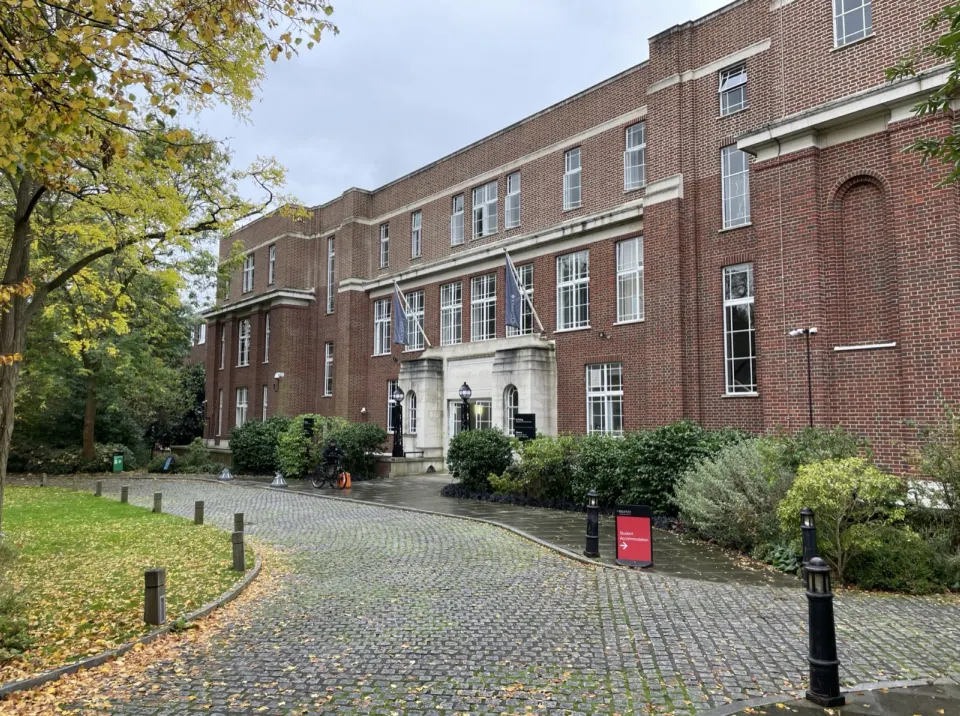
You'll study on a single campus on the Inner Circle of Regent's Park (NW1 4NS). Teaching buildings and halls stand among gardens, looking over a lake and the royal park around them. Central London is on your doorstep, so museums, galleries, employers and nightlife are all within easy reach by public transport, while the park gives you open space right next to campus. Most student life happens on the one site. There's a students' union, sport and fitness through the on-campus Evolve Studio, and societies run by students. One warning: London housing costs a lot, so budget with care and sort out where you'll live early.
Courses and subjects
The schools cover business and management, fashion and design, film, media and performance, law, psychotherapy and psychology, and arts and culture. Well-established subjects include business and luxury brand management, finance, international business, law (LLB) and psychology, all taught in English. Some undergraduate degrees include an integrated foundation year, Architecture BA (Hons) with Foundation for example. That route suits applicants who don't yet meet the grades for direct entry. Regent's also teaches English, including pre-sessional support, for offer holders who need to improve their language level before the degree begins.
Entry requirements for international students
You'll apply with school-leaving or university qualifications that match the UK requirement, plus a personal statement. Country-specific pages list which certificates the university accepts for each nationality. English thresholds depend on the route you take. Degree-level entry commonly asks for a SELT such as IELTS 6.0 overall with no band below 5.5, and some postgraduate courses ask for more. If you fall short, foundation options and pre-sessional English can help you catch up. Requirements differ from course to course, so read the entry criteria on the course page that interests you before applying.
Accommodation
On campus, Reid Hall sits in the grounds of the Regent's Park campus, overlooking gardens, a lake and the royal park beyond. Places there are limited and allocated under the university's accommodation terms, so apply early if you want one. Many students rent privately or take rooms in external student housing elsewhere in London instead. Current availability, prices and deadlines are on the university's accommodation pages.
Scholarships and funding
Among the named awards on the university's scholarships and funding pages are the Vice-Chancellor's Scholarship for India and the Global Law Scholarship. The first gives £8,000 off first-year tuition to a limited number of students joining in September 2026 or January 2027. The second gives selected LLB entrants £5,000 off tuition fees each year. Who qualifies, when you must apply and how much you get all change by year, course and intake. Before you apply, check the scholarships and funding page and the funding section of your course page for what's currently on offer.