- Location
- Middlesbrough
- Founded
- 1930 as Constantine Technical College (university status 1992)
- Students
- about 22,500 (studying in the UK)
- Type
- Public university
- Main intakes
- September, January, May
- Study levels
- Undergraduate, Postgraduate, Research
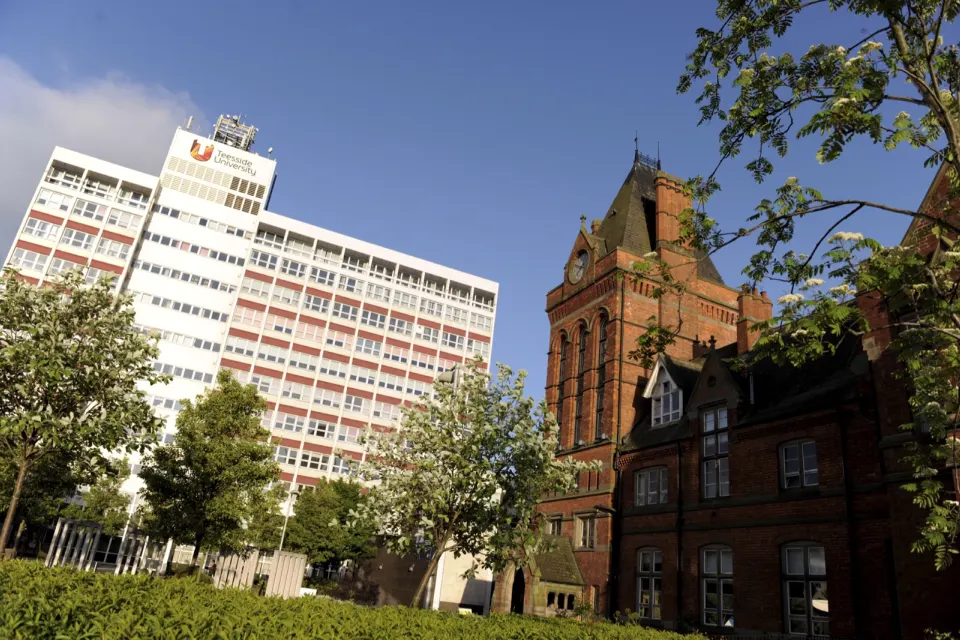
Teesside University is a public university based in Middlesbrough in North East England. It traces its history to Constantine Technical College, opened in 1930, which became Teesside Polytechnic in 1969 and gained university status in 1992. It enrols more than 22,000 students studying in the UK (HESA 2021/22, via Wikipedia) across undergraduate, postgraduate and research programmes. The university is organised into five schools covering arts and creative industries; computing, engineering and digital technologies; health and life sciences; social sciences, humanities and law; and business. It received the Queen's Anniversary Prize (2014-18) for enterprise and business engagement. Its compact town-centre campus keeps teaching, library and support services close together. It also has sites in Darlington and London alongside the main Middlesbrough campus.
Location and student life
The main campus sits in the centre of Middlesbrough, a town in the Tees Valley in North East England, so teaching buildings, the library, the Students' Union and accommodation are close together and much of student life is within walking distance. The university also has a campus in Darlington and a site in London. Middlesbrough is reached by road via the A19 and A66, and TransPennine Express trains link it with Newcastle, York, Leeds, Manchester and Liverpool. Teesside International Airport is about 13 miles away, and coaches run to and from Middlesbrough bus station.
Courses and subjects
Teesside is organised into five schools: the School of Arts and Creative Industries; the School of Computing, Engineering and Digital Technologies; the School of Health and Life Sciences; the School of Social Sciences, Humanities and Law; and the Teesside University International Business School. Together they cover subjects from computing and engineering to health and life sciences, business, law, social sciences and art and design. The university also offers foundation-level routes and pre-sessional English courses for international students who need extra preparation, and selected courses start in January and May as well as September.
Entry requirements for international students
International entry requirements depend on the course and the applicant's country, so the university's 'Your country' pages are the place to check exact criteria. English language requirements also vary: the university's pre-sessional English tables list degree entry points from IELTS 5.5 up to IELTS 7.0, with many courses asking for around IELTS 6.0. Students below the required level can take 6- or 12-week pre-sessional English courses, and foundation routes are available. Always confirm the exact requirement on the relevant course page.
Accommodation
Teesside offers university-managed accommodation including halls of residence, and states that accommodation is available to international students on undergraduate and postgraduate courses. Students apply for accommodation after firmly accepting an offer (international students also need a valid CAS and a tuition fee deposit). Exact prices, room types and any guarantee vary each year, so check the accommodation pages before applying.
Scholarships and funding
International students can apply for the Global Excellence Scholarship, worth £2,000 as a fee waiver in the first full academic year across foundation, undergraduate and postgraduate courses. The Vice-Chancellor's Scholarship offers up to 30 awards of £7,000 for September entry, and two British Council GREAT Scholarships of £10,000 are available for one-year postgraduate courses for students from Italy and India. Criteria and deadlines change each year, so check the university's scholarships pages.