Apply for 2026 / 2027 intake.
Study at The University of Law
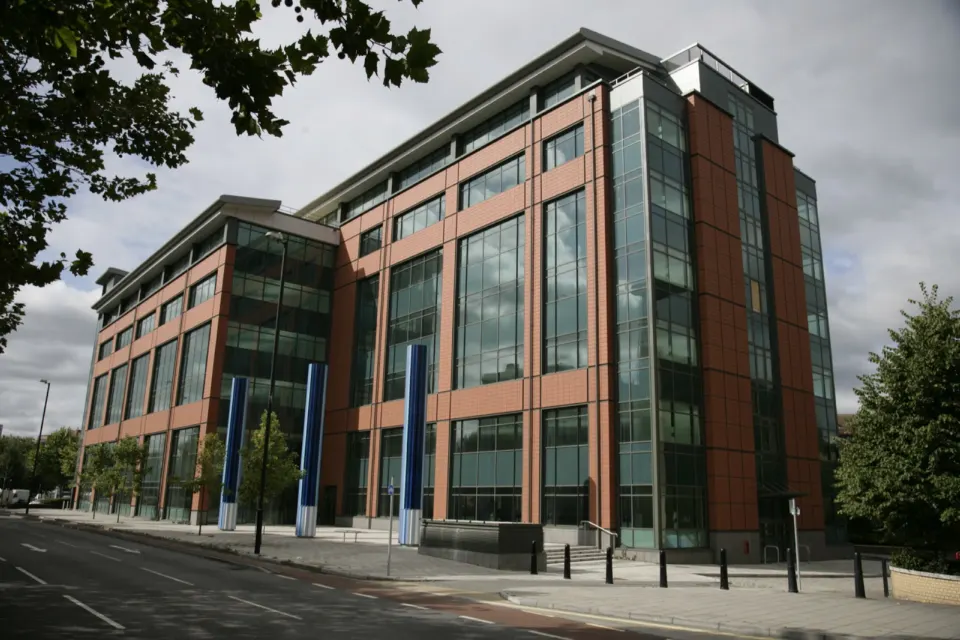
- Location
- London, Birmingham, Bristol, Leeds, Manchester, Nottingham
- Founded
- 1962 (as the College of Law); university status 2012
- Students
- about 19,730 (2024/25)
- Main intakes
- September, January
- Study levels
- Undergraduate, Postgraduate, Professional qualifications
- Type
- Private, for-profit university
The University of Law is a private, for-profit university in England that specialises in legal and professional education. Founded in 1962 as the College of Law of England and Wales, it received university status in 2012 and now teaches about 19,730 students (2024/25) across campuses in London, Birmingham, Bristol, Leeds, Manchester and Nottingham, with further teaching at partner universities and online. It is best known for training solicitors and barristers, including law degrees, law conversion courses and Solicitors Qualifying Examination (SQE) preparation, alongside business, psychology, criminology, policing and computer science. Study is career-focused and available full-time, part-time and online, with employability support built into courses and the largest student community at its London Bloomsbury campus, close to the capital's legal and business districts.
Location and student life
The university teaches at six campuses in England: London (Bloomsbury and Moorgate), Birmingham, Bristol, Leeds, Manchester and Nottingham, with further ULaw teaching at partner universities such as Lancaster, Newcastle, Exeter, Liverpool and Sheffield, alongside online study. The Bloomsbury site in central London is its largest campus, and the Bristol campus sits at Temple Circus House in the Temple Quarter. Its former Guildford campus closed in June 2024. Campuses are city-centre bases, so student life centres on the host city, and each campus page on the official site gives maps and travel details.
Courses and subjects
Teaching covers law (LLB degrees, law conversion, SQE preparation and professional legal training), business and management through its Business School, psychology, criminology, policing and computer science. Undergraduate and postgraduate degrees are offered full-time, part-time and online, with professional courses and apprenticeships alongside academic degrees. International applicants who do not yet meet degree entry requirements can take an International Foundation Programme in Law or Business, which runs from September to June and leads to undergraduate study on successful completion. Online study options cover many of the same subject areas for students who need distance learning.
Entry requirements for international students
Requirements vary by course, so always check the exact criteria on the relevant course page. Undergraduate applicants typically offer school-leaving qualifications equivalent to UK A-levels, while postgraduate courses generally ask for a recognised first degree. Published English-language levels include IELTS 6.5 or 7.0 for many undergraduate law and business courses, IELTS 6.0 for several postgraduate courses, and IELTS 5.0 for the International Foundation Programme; the university also accepts its own ULET English test. Some law courses set higher scores, so confirm the figure for your course.
Accommodation
The university does not run its own halls of residence. Instead it reserves rooms with purpose-built student accommodation providers in its campus cities and lists private options, including student houses, flats and lodgings, through its partnership with Studentpad. Students apply for the reserved rooms by a published deadline, and the university states it cannot guarantee an offer after that date. As with other UK cities, London accommodation costs more, so applicants should budget and apply early.
Scholarships and funding
The university states that it holds over £3 million in its scholarship fund, with undergraduate, postgraduate and international awards assessed through a single scholarships application made after an offer. Eligible international students can receive the International Bursary, whose published amounts vary by course and by London or non-London study, reaching £5,500 in total for some courses; entitlement is confirmed in the offer letter. Named and firm-linked awards also appear in some years. Award names, values and deadlines change each year, so check the official scholarships pages before applying.
Take a look around The University of Law
Official links and sources
- The University of Law official website
- en.wikipedia.org/wiki/University_of_Law
- law.ac.uk/students/international/why-study-with-us/financial-information/international-scholarships
- law.ac.uk/study/scholarships-bursaries
- law.ac.uk/students/accommodation
- law.ac.uk/study/undergraduate/entry-requirements
- law.ac.uk/study/postgraduate/entry-requirements
- law.ac.uk/students/international/the-application-process/international-preparation-courses