- Location
- Cambridge
- Founded
- 1209
- Students
- about 22,600 (2024/25)
- Type
- Collegiate public research university
- Main intakes
- October
- Study levels
- Undergraduate, Postgraduate, Continuing education
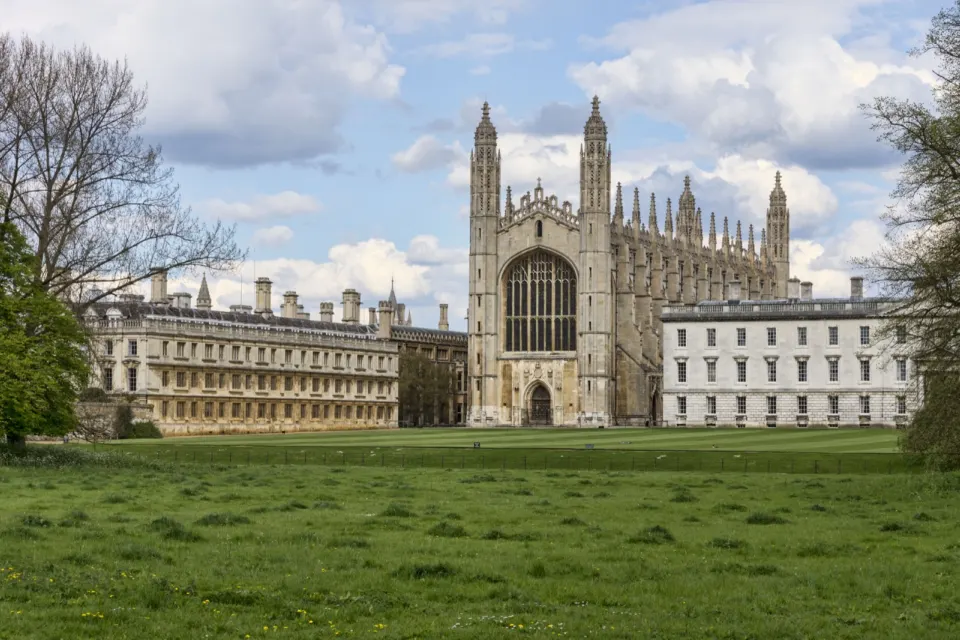
The University of Cambridge is a collegiate public research university in Cambridge, England. Founded in 1209, it is the second-oldest university in the English-speaking world and the third-oldest university in continuous operation. Teaching and student life centre on its 31 autonomous colleges, which admit their own students and provide small-group supervisions alongside the university's faculties and departments. The university enrols about 22,600 students.
Why study at University of Cambridge
It is organised into six schools: Arts and Humanities, Biological Sciences, Clinical Medicine, Humanities and Social Sciences, Physical Sciences, and Technology. Undergraduate study is academically intensive, with students examined in a single exam period and taught through lectures, practicals and college supervisions. Research at Cambridge spans science, technology, medicine and the humanities, supported by extensive libraries, museums and collections.
Location and student life
Cambridge is a historic city where the university's colleges, faculties, departments, libraries and museums sit within and around the city centre rather than on a single enclosed campus. During term time undergraduates must live within three miles of Great St Mary's Church unless their college agrees otherwise, so most students live close to teaching, libraries and college facilities. Colleges typically provide a dining hall or cafeteria, a library, and often a gym and sports grounds. The city is compact and student life centres on colleges, societies and sport, with dedicated city-life and support information on the university's student-life pages.
Courses and subjects
Teaching and research are organised through faculties and departments grouped into six schools: Arts and Humanities, Biological Sciences, Clinical Medicine, Humanities and Social Sciences, Physical Sciences, and Technology. Undergraduate courses include long-established options such as Medicine and Law alongside sciences, technology, arts and humanities subjects, and all students receive college supervisions in small groups. Applicants apply for a specific course, and the university publishes accepted qualifications and course-level requirements on its undergraduate pages. Adults seeking flexible study can consider continuing education certificates, diplomas and part-time master's degrees.
Entry requirements for international students
International applicants apply for a named course and are assessed against course-level academic requirements, so exact grades and accepted qualifications vary and should be checked on the relevant course page. Applicants from outside majority English-speaking countries need strong English: for interview the university recommends at least IELTS Academic 6.5 overall with no element below 6.0, while offers normally require at least 7.5 overall with 7.0 in each element; postgraduate requirements vary by course, commonly 7.0 to 7.5 overall. Cambridge does not ask for a test result at application if you have not yet taken one, and colleges set any English condition in the offer.
Accommodation
Undergraduate accommodation is provided by the colleges rather than through a separate application: it is guaranteed for three or four years for single students without children, in college-owned property. Contracts typically cover about 27 to 39 weeks a year rather than a full 12 months, and costs vary by college and room type, usually including bills, cleaning and basic self-catering facilities alongside catered dining options. During term time students normally live in college accommodation within three miles of the city centre.
Scholarships and funding
Undergraduate funding for international students is limited and mostly partial and means-tested. The Cambridge Trust offers awards to overseas students who have been accepted by a college, with applications made after an offer; some colleges add their own partial awards, and Hong Kong permanent residents can apply for the Prince Philip Scholarship. For postgraduate study, the Gates Cambridge Scholarship provides about 75 full-cost awards each year to outstanding applicants from outside the UK. Always check the university's funding pages, as the awards and deadlines change each year.
Take a look around University of Cambridge
Official links and sources
- University of Cambridge official website
- en.wikipedia.org/wiki/University_of_Cambridge
- cam.ac.uk/colleges-and-departments
- undergraduate.study.cam.ac.uk/apply/before/entry-requirements
- undergraduate.study.cam.ac.uk/student-life/accommodation
- undergraduate.study.cam.ac.uk/international-students/financial-support
- student-funding.cam.ac.uk/fund/gates-cambridge-scholarship-2025